Mold Removal in Los Angeles, CA
LA Mold Removal Pros is a mold removal company serving homes, rental properties and businesses across Los Angeles, CA. The crew finds where the growth is and where the moisture feeding it comes from, removes the mold and the material it has colonized under containment, and dries and fixes the source so it does not return. Every job ends with the air cleaned and, where you want it, an independent clearance test.
Rather type than talk? Request an inspection online
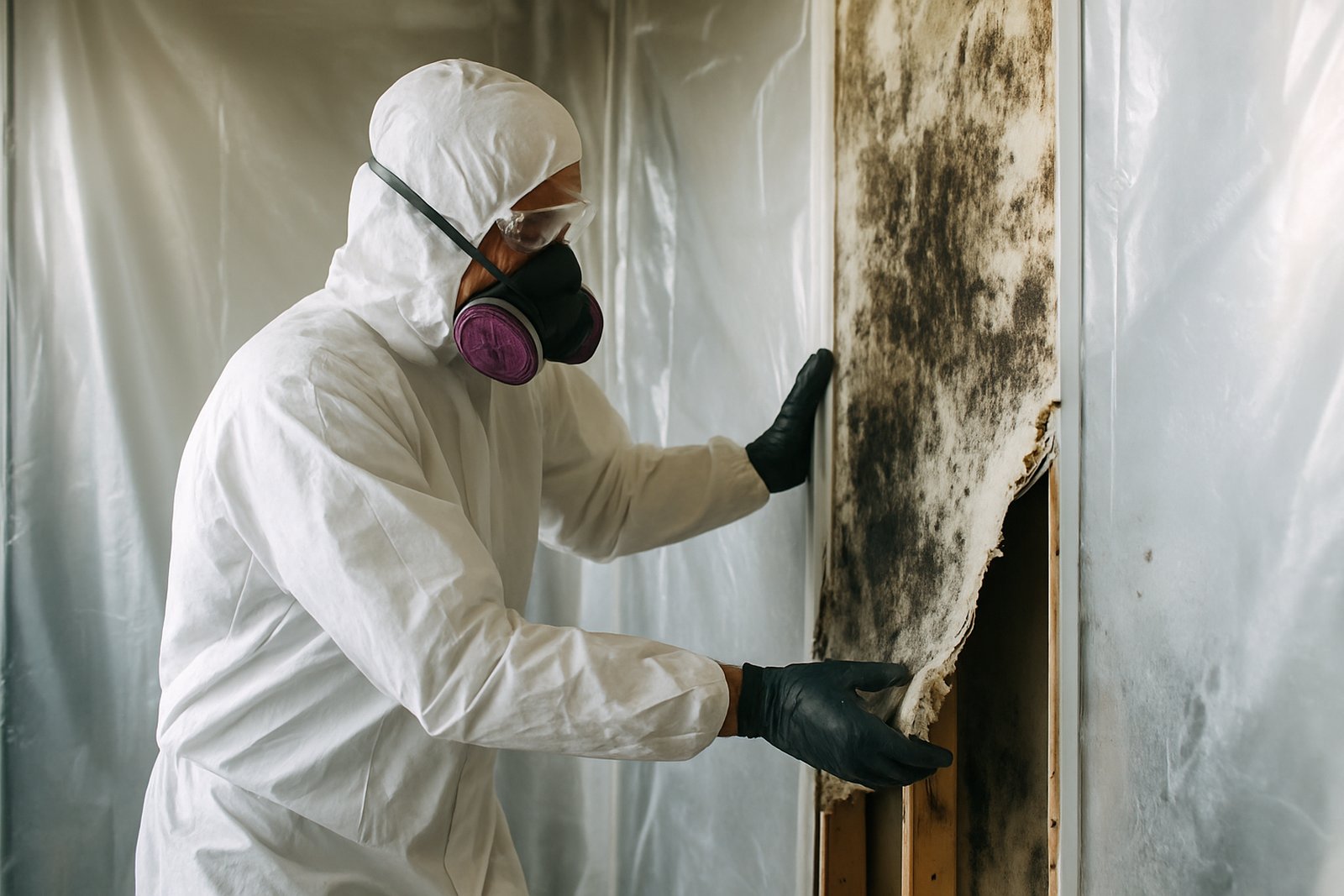
Mold removal services in Los Angeles
Mold jobs differ by where the growth is and what caused it. The pages below cover the common situations and what affects the cost.
Mold inspection and moisture testing
A visual inspection, a moisture survey and a look in the places growth hides, with a written scope that names the cause.
Mold remediation
Growth and the material it colonized removed under containment, the air cleaned, the water source fixed and the result verified.
Attic mold removal
Growth on roof sheathing and rafters from poor ventilation or a roof leak removed, the attic dried and the ventilation corrected.
Bathroom and kitchen mold removal
Growth behind vanities, around showers and tubs, under sinks and inside cabinets removed, the leak or ventilation problem fixed.
Crawl space mold removal
Growth on joists and subfloor from ground moisture or a leak removed, the crawl space dried and a vapor barrier installed.
Mold after a leak or flood
Growth that followed a burst pipe, a roof leak or a flood that was never dried properly, removed along with the wet material.
Air duct and HVAC mold cleaning
Growth in air handlers, coils, drain pans and ductwork removed so the system stops spreading spores through every room.
From your call to a clearance test
You call, we ask where and why
What you see or smell, where it is, whether there has been a leak or flood, and whether anyone in the home has symptoms. That decides whether the first visit is an inspection or an emergency dry-out.
Inspection and moisture survey
The technician checks the visible growth, meters the walls and floors around it, finds the water source and looks in the places growth hides. You get a written scope with the cause named.
Containment and removal
The work area is sealed under negative air with HEPA filtration. Colonized porous material comes out; hard surfaces are cleaned and treated. Nothing is painted over or sprayed and left.
Fix the water, clean the air, verify
The leak or ventilation problem is corrected, the space is dried, HEPA air scrubbers run, and an independent clearance test confirms the result when you want one.
Why Los Angeles homeowners call LA Mold Removal Pros for mold removal
Mold is a symptom. Somewhere there is water, a slow leak, condensation, a bathroom that never dries, and the growth is what it produces. Kill the growth and leave the water, and it is back in a season. The inspection spends as much time on moisture readings and the source as on the mold itself, and the scope says what will be fixed as well as what will be removed.
The removal is done the way the standard describes it: the area sealed under negative pressure so spores do not travel to the rest of the house, the crew in protective equipment, colonized drywall and insulation removed rather than treated, hard surfaces cleaned by HEPA vacuum and damp wiping, and the air scrubbed. Bleach on a wall is not remediation, and neither is a fogger.
You get a written result. Photos before and after, moisture readings, the cause and the fix, and an independent clearance test if you order one. That record is what a buyer, a landlord, a tenant or an insurer will ask to see.
Mold removal in Los Angeles: local conditions
Los Angeles has a dry reputation, and the coastal and basin neighborhoods still carry enough humidity from the marine layer to grow mold in poorly ventilated bathrooms, closets and garages. Winter storms find old roofs and window flashings, and the moisture that gets in stays in walls that were never designed to dry out.
The housing stock is old and varied: 1920s bungalows, mid-century apartments, hillside homes with drainage problems and stucco buildings with hidden leaks. Slab leaks and long-running plumbing leaks behind walls are the most common source of growth that has spread by the time anyone notices it.
Areas we serve around Los Angeles
Crews cover 185 ZIP codes across the Los Angeles area. Pick your city for local details, or call and give us your address.
- Torrance6 ZIP codes
- Inglewood5 ZIP codes
- Long Beach12 ZIP codes
- Glendale9 ZIP codes
- Pasadena7 ZIP codes
- Whittier6 ZIP codes
- Santa Monica1 ZIP codes
- Burbank2 ZIP codes
- North Hollywood1 ZIP codes
- Beverly Hills3 ZIP codes
- Compton3 ZIP codes
- Downey3 ZIP codes
- Gardena3 ZIP codes
- Lakewood3 ZIP codes
- Carson3 ZIP codes
- Culver City2 ZIP codes
- Redondo Beach2 ZIP codes
- La Mirada2 ZIP codes
- Arcadia1 ZIP codes
- El Monte2 ZIP codes
- La Puente1 ZIP codes
- Monterey Park2 ZIP codes
- San Gabriel2 ZIP codes
- Alhambra2 ZIP codes
- Buena Park2 ZIP codes
Do I need a test, or an inspection?
Start with the inspection. If mold is visible, testing tells you what you already know. Testing earns its place when growth is suspected but hidden, when someone has symptoms and nothing is visible, or for a clearance after remediation. We say which applies before you spend anything.
Can I just clean it with bleach?
A small patch on a hard surface such as tile, yes, with ventilation and gloves. Growth on drywall, wood or ceiling tile, anything larger than about a bathroom mirror, or anything that keeps coming back means the material is colonized and the water source is still there. That is a removal job.
Is the mold in my house dangerous?
Mold affects people differently. Allergies, asthma and respiratory symptoms are common reactions, and people with weakened immune systems are at higher risk. The practical answer is that indoor growth of any type should be removed and its water source fixed, whatever the species.
Will insurance cover it?
Sometimes. Mold that results from a sudden, covered water event is often covered, usually with a cap; mold from long-term leaks, humidity or neglected maintenance usually is not. We document the cause and the work either way; the coverage decision is the insurer's.
Do we have to move out?
Usually not. The work area is sealed under negative air, so the rest of the house stays clean. People with respiratory conditions or infants sometimes prefer to be away during the removal days, and the technician will tell you what he recommends for your situation.
How long does mold removal take?
A bathroom or a single wall is usually one to three days. Growth through several rooms, an attic or a crawl space runs a week or more, including the drying. The scope tells you the plan before the work starts.
Found mold, or a smell you cannot place?
Call and describe it. We tell you whether it needs a visit and what the inspection looks for.